• Skip to primary navigation
  • Skip to main content
  • Skip to primary sidebar
  • Skip to footer

SuperTekBoy

Practical Help for Exchange & Office 365

  • Exchange
    • News
    • Tutorials
    • Solve a Problem
  • Office 365
    • News
    • Tutorials
    • Solve a Problem
  • Outlook
    • Tutorials
    • Solve a Problem
  • Books
  • Podcasts
  • Quick Links…
    • Generate or Renew SSL Certs for Exchange
    • Connect PowerShell to Exchange Online
    • Connect PowerShell to Office 365
    • Extend Schema for Exchange
    • Exchange Schema & Build Numbers
  • More…
    • Kemp Load Balancers
    • Other tech…
    • Videos
    • About SuperTekBoy
    • Contact Us

Office 365 Tutorials

Recover deleted email using the new Exchange Admin Center

June 16, 2020 By Gareth Gudger 12 Comments

Share
Tweet
Share

The PowerShell command to recover deleted email for a user has been around for some time. However, these PowerShell commands now have a graphical interface in the new Exchange Admin Center.

In this article, we explore how to recover deleted email for a user. But first, there are some permission prerequisites.

Assigning your admin account recovery permissions

Before we can restore mail for a user we need permission to do so. The permission in question is the Mailbox Import / Export permission. By default, no one is assigned this permission in Exchange.

Log onto the Exchange Admin Center and navigate to Permissions > Admin Roles.

At this point, we have two options. We can either assign the Mailbox Import / Export role to an existing role group (such as Organization Management) or, we can create a new role group. Let’s do the latter.

Click the New button (). This launches the new role group dialog.

Creating a new role group for Mailbox Import Export

Type a Name and Description for your role. In our example, we went with Email Recovery Role.

If needed select a custom write scope, or, leave at default. The default scope allows the role holder to apply these permissions to the entire organization. You can define a custom write scope to limit the scope of this permission. For example, the scope could be limited to a specific business unit or group of users. This is particularly useful if you need to delegate this role.

Under Roles click the Add button ().

Double-click Mailbox Import Export and click Ok.

Under Members click the Add button ().

Double-click each administrator you want to assign this role and click Ok.

Click Save.

Note: Once the role group is created it can take up to one hour for the permissions to take effect.

[Read more…] about Recover deleted email using the new Exchange Admin Center
Filed Under: Office 365 Tutorials

Use Log Parser Studio in your Exchange & Office 365 migration planning

March 23, 2020 By Gareth Gudger 1 Comment

Share
Tweet
Share

One of the great unsung heroes is Log Parser Studio. This utility allows you to easily parse through gigabytes upon gigabytes of IIS logs to find the information you need. Without this tool, this task is tedious in a single Exchange server environment and is significantly worse in Exchange environments with many servers.

Log Parser Studio is great for migration planning and discovery and is a tool I have always had in my tool belt. It does not matter if you are migrating to a newer version of Exchange or Office 365; Log Parser Studio can aid in planning both scenarios. For discovery, I use it in the following two ways:

  • First is to identify third-party integrations, such as those from a voicemail system, fax solution, or conference room system
  • Second is to identify all client software connecting to Exchange

Once you have identified the third-party integrations and clients, you can add them to your migration plan and determine the next steps. This could include upgrading legacy Office clients or testing the integration of a third-party app against the target system.

Discovery with Log Parser Studio becomes especially useful in environments where Exchange predates the current IT team or where knowledge and documentation have been lost over time.

In this article, we will explore how to use Log Parser Studio to identify the multitude of client software and third-party integrations.

Let’s get started!

Installing Log Parser Studio

Log Parser Studio comes in two downloads. The first is the original command-line utility known as Log Parser. The second is Log Parser Studio, which was later developed to provide a GUI for that command line. We will need to download both components for this process.

  • Log Parser 2.2
  • Log Parser Studio

Tip: I recommend installing Log Parser on a workstation and not directly on an Exchange server. That way we avoid adding unnecessary CPU cycles to the Exchange server.

First, we need to install Log Parser 2.2. Double-click on the LogParser.msi. On the installation screen, click Next. Accept the license agreement and click Next. On the Choose Setup Type screen, click Complete. Click Install. After the installation completes, click Finish.

Next, we need to install Log Parser Studio. Unzip the file LPSV2.D2.zip (I recommend unzipping this to your desktop). Open the newly created LPSV2.D2 folder and launch LPS.EXE.

Launching Log Parser Studio

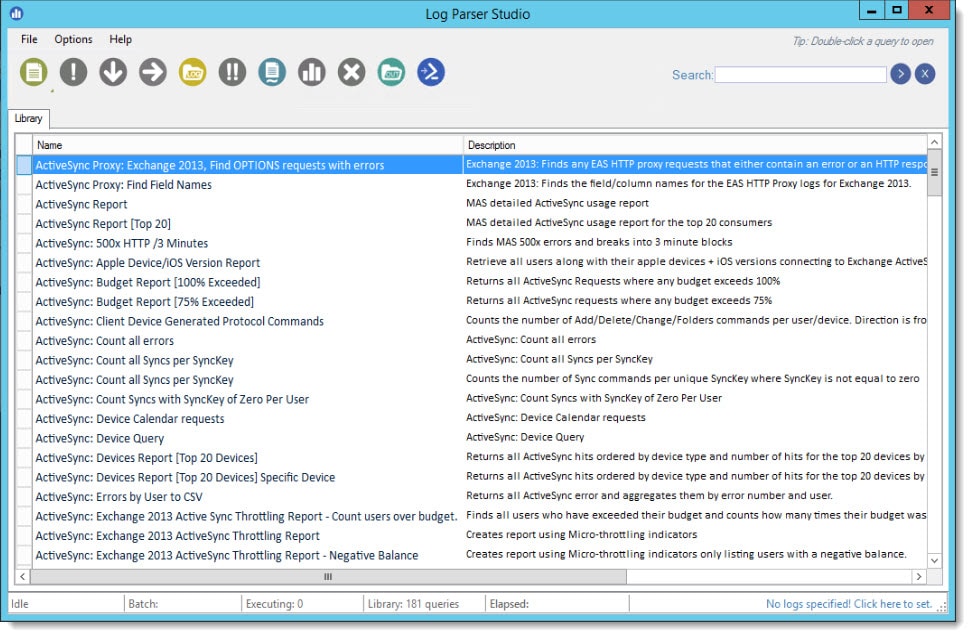
This will launch Log Parser Studio.

Log Parser Studio
[Read more…] about Use Log Parser Studio in your Exchange & Office 365 migration planning

Filed Under: Exchange Tutorials, Office 365 Tutorials

Add external sender disclaimer in Office 365

February 17, 2020 By Gareth Gudger 36 Comments

Share
Tweet
Share

UPDATE 8/2/23: Another way to accomplish this is to enable the built-in external tags now supported by M365 Apps (Build 2211 and greater), Outlook on the Web, and Outlook Mobile. Note that this external tag will not work in older versions of Outlook or M365 Apps (prior to build 2211), so you may still need the original solution listed in this article.

If you are on M365 Apps, you can connect to Exchange Online PowerShell and run the following command: Set-ExternalInOutlook -Enabled $true

For more information, check Microsoft’s article Native external sender callouts on email in Outlook

Adding an external sender notification to the top of an email is an important distinction for many companies. This disclaimer quickly identifies its end users when a message is sourced from an external sender. This eliminates the guesswork for internal users, helping them to identify potential phishing attacks, but also a great reminder when it comes to data loss prevention as they reply.

Companies approach this disclaimer in many different ways. Two common examples are a disclaimer prepended at the top of the email or adding a keyword in the message subject.

Thankfully, adding this is a simple process in Office 365 (and also Exchange on-premises – the instructions are identical).

For this article, our example company, Time Travel Research, wishes that all inbound email from external senders is prepended with a disclaimer stating the sender is external to the organization. Time Travel Research wants to ensure that every instance of an external email, even those in the same email chain, is prepended with this disclaimer.

Let’s get started!

Add an external sender disclaimer to all inbound email

Log in to the Exchange Admin Center. Once logged in, navigate to Mail Flow >> Rules. Click the New (Excchange 2016 New) button.

From the drop-down menu, you will notice several choices. These choices are predefined rule templates. We will create a rule from scratch. Select Create a new rule.

Create a new transport rule in Office 365
[Read more…] about Add external sender disclaimer in Office 365

Filed Under: Exchange Tutorials, Office 365 Tutorials

Secure files in OneDrive Personal Vault

October 13, 2019 By Gareth Gudger Leave a Comment

Share
Tweet
Share

Microsoft recently released a new feature in OneDrive Consumer called Personal Vault.

Personal Vault adds a layer of security within OneDrive. This means if anyone gains access to your OneDrive (for example, by circumventing your device’s security), they still need to authenticate to get access to the Vault.

This makes the Personal Vault great for securing those critically confidential files, such as a scan of your Passport, Driver’s license, or, Tax ID card.

Personal Vault is available anywhere OneDrive is available. In this article, we explore setting up Vault for the first time and accessing Vault from desktop, mobile, and web.

Note: Free OneDrive plans (like those through Outlook.com) are limited to 3 files in the Vault. Office 365 for Home or Personal does not have this limitation.

Setting up OneDrive Personal Vault on mobile

OneDrive Personal Vault Mobile Setup A

From your mobile device, open your OneDrive app and select the Files tab. You should see a new folder called Personal Vault.

The first time you open Vault, it will walk you through a setup wizard. Click Personal Vault.

The first screen will give you an overview of the Personal Vault. Click Continue. You will then be asked to verify your identity. Click Verify Identity.

Note: The identity verification process will vary based on the mobile device you own and the security you set up with your Microsoft account. For example, you may be required to enter a code from a text or authenticator app.

  • OneDrive Personal Vault Mobile Setup B
  • OneDrive Personal Vault Mobile Setup C
[Read more…] about Secure files in OneDrive Personal Vault

Filed Under: Office 365 Tutorials

Dark Mode Compilation

September 15, 2019 By Gareth Gudger Leave a Comment

Share
Tweet
Share

I have always been a big fan of dark mode for any application as I spend more hours than I care to admit at my computer, so eye strain is always a concern.

Dark mode lets us protect our eyeballs from the harsh glare of a white screen, and it may just conserve a little more battery life on our mobile devices.

The articles below are a compilation of tutorials with easy to follow steps on setting a dark theme in your favorite app.

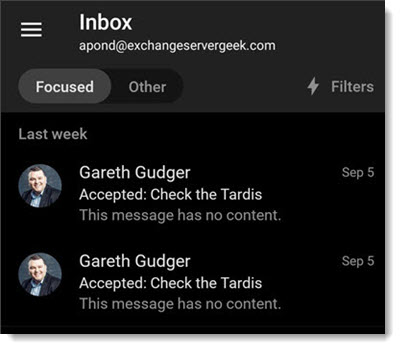
Outlook Mobile Inbox in Dark Mode Thumbnail 2

Outlook Mobile

In this article, we explore how to enable dark mode in Outlook Mobile. Read more…

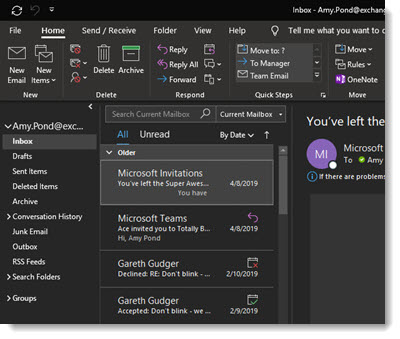
Outlook on Windows Black Theme Thumbnail

Outlook Desktop

In this article, we explore the dark theme in Outlook Desktop. We also explore how to turn the lights on and off temporarily and permanently in the reading and composition panes. Read more…

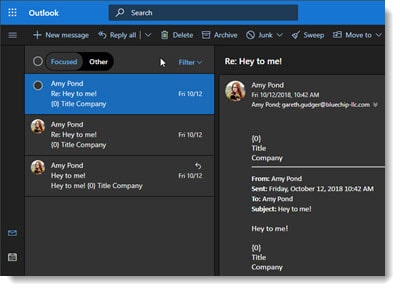
Outlook on the Web Dark Theme Thumbnail

Outlook on the Web

In this article, we explore dark mode in Outlook on the Web (OWA). We also explore how to turn the lights on and off in the reading and composition panes. Read more…

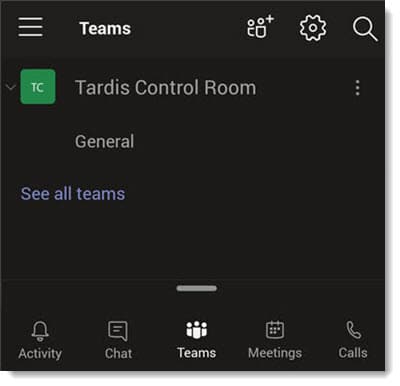
Teams Dark Mode Thumbnail

Teams Mobile

In this article, we explore how to enable dark mode in Microsoft Teams mobile. Read more…

Microsoft Teams Dark Theme Thumbnail

Teams Desktop

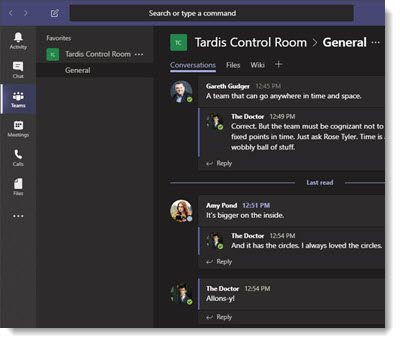
In this article, we explore setting Microsoft Teams to a dark theme. Read more…

Windows 10 1809 Dark Mode Thumbnail

Windows 10

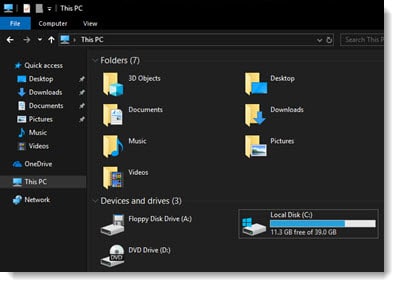
In this article, we explore how to set Windows 10 to a dark theme. This includes changing Windows Explorer to dark mode. Read more…

Twitter

Which app do you prefer in dark mode? Is there an app I should add to the list? Drop a comment below or join the conversation on Twitter @SuperTekBoy.

Filed Under: Office 365 Tutorials, Outlook Tutorials

Enabling Dark Mode in Outlook Mobile

September 12, 2019 By Gareth Gudger 1 Comment

Share
Tweet
Share

If you are like me and like to work on a mobile device at night, or, just work with the lights off, then dark mode is for you. I find a dark theme helps with eye strain. In addition, many sources also report that a dark color scheme helps conserve battery power on mobile devices.

The mobile client of Outlook has such a mode.

Let’s get started!

Enabling Dark Theme in Outlook Mobile

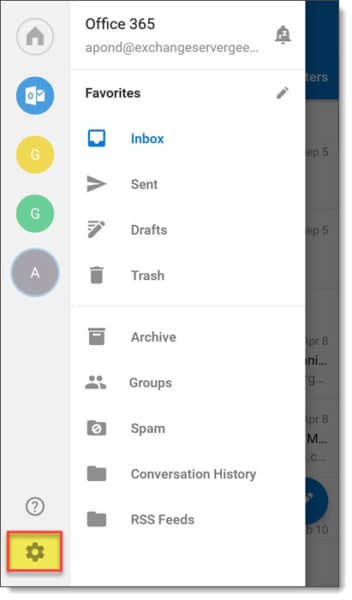
To enable dark theme in Outlook Mobile, click the Menu button in the top-left and then Settings (represented by a gear icon).

Outlook Mobile Menu
Outlook Mobile Settings

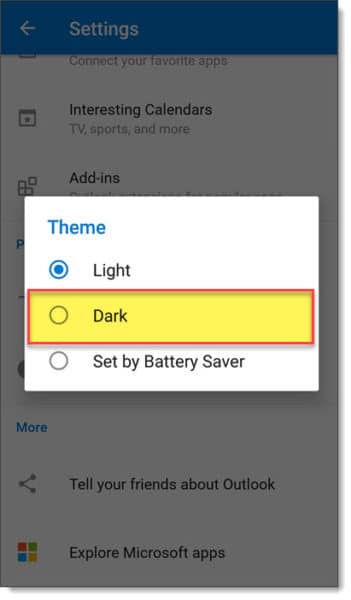
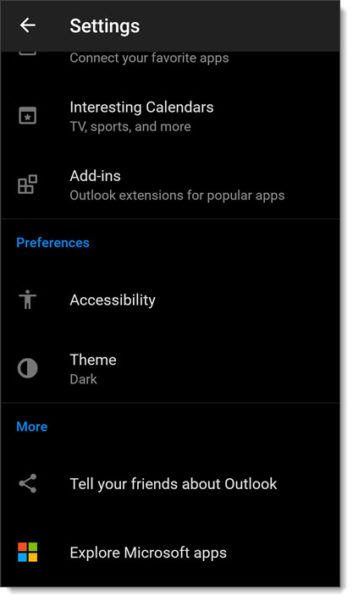
From the Settings page scroll down to the Preferences section. Click Theme. From the Theme pop-up select Dark.

Note: The Set by Battery Saver mode adjusts between the light and dark themes based on your device’s battery conservation settings. Microsoft states switching to dark mode consumes less device power.

Outlook Mobile Setting Dark Theme

The Preferences section now identifies your theme as Dark. To change to another theme, click Theme again and make a new selection. To revert to the default theme click Light.

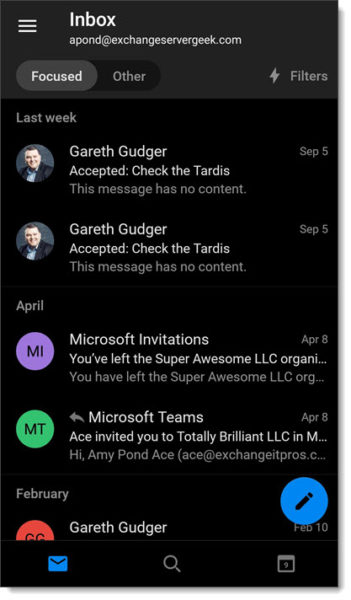
Once satisfied, click the back arrow in the top left of the screen. Your inbox will now reflect your current theme. In our screenshot below, our inbox has updated to the dark theme.

Outlook Mobile Settings in Dark Mode
Outlook Mobile Inbox in Dark Mode
[Read more…] about Enabling Dark Mode in Outlook Mobile

Filed Under: Office 365 Tutorials, Outlook Tutorials

  • « Go to Previous Page
  • Page 1
  • Page 2
  • Page 3
  • Page 4
  • Page 5
  • Go to Next Page »

Primary Sidebar

Want to stay up to date?

Sidebar Form

Join thousands of IT professionals and get the latest Exchange & Office 365 tips and tutorials direct to your inbox

DigiCert Banner 300x348

(help support us using our affiliate link)

Footer

Site Navigation

  • Subscribe to blog
  • About SuperTekBoy
  • Disclaimer
  • Privacy & Cookies
  • Contact Us

Want to stay up to date?

Footer Form

Join thousands of IT professionals and get the latest Exchange & Office 365 tips and tutorials direct to your inbox

Join the conversation

  • Twitter
  • LinkedIn
  • Facebook
  • RSS

Copyright © 2026 · SuperTekBoy LLC